
| No. | Test Item | Scope of Application |
| 1 | Seed Sampling | Field crops |
| 2 | Purity Analysis | Field crops |
| 3 | Germination Rate Test | Field crops |
| 4 | Moisture Content Determination | Field crops |
| 5 | 1000 Kernel Weight Measurement | Field crops |
Industry Service and Technical Support Capacity
Technical Support for Government Seed Industry Supervision
1. Undertake technical support work for seed‑industry supervision assigned by competent agricultural and rural authorities.
2. Cooperate in annual seed market supervision sampling, special rectification in spring and autumn seed seasons, special investigation of seed‑production bases, regular review of registered varieties, and special screening of counterfeit seeds.
Technical Services for Seed Enterprises
1. Provide comprehensive technical services for breeding enterprises, seed‑production enterprises and seed‑operation enterprises.
2. Offer customized testing services including SSR fingerprint establishment for new varieties, genotype traceability of parental materials, off‑type‑plant screening during seed production, pre‑inspection of finished‑seed purity and authenticity, and seed‑quality risk investigation.
3. Deliver technical consultation, hands‑on personnel training and guidance on testing‑process optimization, helping enterprises build in‑house quality‑control systems, improve self‑inspection capacity for seed quality, reduce seed‑quality risks at source and avoid variety‑infringement hazards, and support standardized and high‑quality development of regional seed enterprises.
Support Services for Scientific Research and Variety Administration
1. Cooperate with scientific‑research breeding institutions and variety‑administration authorities, and provide standardized SSR fingerprint data for new‑variety breeding, approval, registration and variety protection.
2. Conduct DNA fingerprint testing and comparative screening for trial and registered varieties in accordance with the latest national variety‑administration requirements, and issue compliant fingerprint test reports. Assist auxiliary judgment on distinctness and uniformity of new varieties and screen variety homogenization. Technically guarantee the standardization and rigor of variety approval and registration, and prevent homogeneous and counterfeit varieties from entering the market.
Quality‑Dispute Arbitration and Judicial Evidence‑Providing Services
1. Undertake arbitration inspection for regional seed‑quality disputes, technical appraisal for new‑plant‑variety‑right infringement, and testing for judicial evidence collection.
2. Issue SSR molecular test reports with legal validity. Complete test data and profiles, traceable workflows and clear standard references enable the reports to act as core technical evidence for market supervision, judicial trials and dispute mediation, and effectively resolve seed‑industry quality disputes and property‑right conflicts.
Why Choose Baier Testing
1. Mature Qualification Management System
Possess complete quality‑management systems of CMA, CASL, CNAS and CATL, which meet CASL seed‑inspection assessment requirements. Existing systems can be reused directly to shorten the qualification‑application cycle for seed testing.
2. Solid Hardware and Laboratory Infrastructure
Equipped with standardized agricultural‑testing laboratories with complete functional zones. Special seed‑testing areas can be rapidly retrofitted, and existing instruments can be shared to reduce construction investment.
3. Sufficient Pool of Agricultural‑Testing Technical Talents
Have a professional team specializing in agronomy and molecular biology. Supported by university‑enterprise cooperation, qualified certified seed inspectors can be rapidly trained.
4. Distinct Business Synergy Strengths
Seed testing can be coordinated with soil and agricultural‑product testing businesses to deliver integrated comprehensive testing services covering seed‑environment‑agricultural‑product chains for seed‑industry clients.
5. Rich Experience in Projects and Market Services
Long‑term undertaking of sampling‑monitoring projects assigned by agricultural authorities with full awareness of supervision requirements. Sampling, project management, data reporting and report‑delivery workflows are mature and standardized.
6. Strong Credibility of Quality and Data
Have passed multiple proficiency verifications at all levels. Full‑process closed‑loop testing management ensures traceable data to satisfy business demands of supervision, breeding and variety registration.
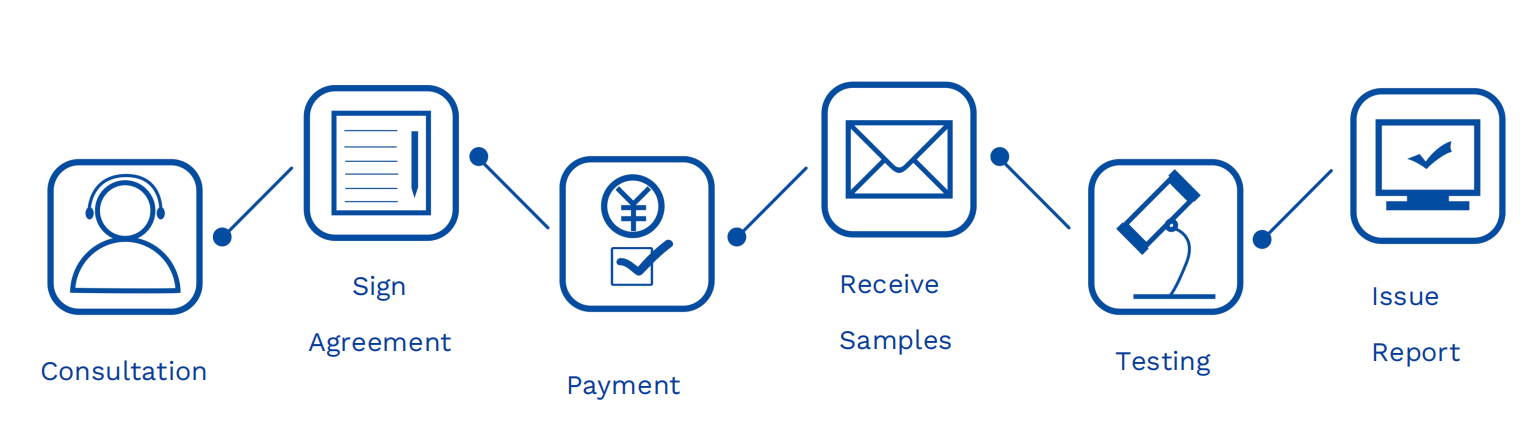
Testing Procedures